Showing posts with label language. Show all posts
Showing posts with label language. Show all posts
Tuesday, October 16
Dump
If you simply cannot wait for this years Brussels christmas market then why not just "dump" into the atmosphere of the 2006 edition.


Monday, April 2
Wednesday, March 7
Alotta Fagina
Ronald Plasterk, Dutch politician and current minister for Education, Culture and Science in the government of Harry Potter, sorry I mean Jan Peter Balkenende, has called for a single working language in the European Union.
In an interview with the NRC Handelsblatt, Plasterk says that "there is not a single serious international organisation where a single language isn't spoken, generally English. In science, business, sport, the army, art, in show business, " Ankara your votes please", nowhere else have you a circus in which 25 languages are translated in all different directions. Even at the European Central Bank they speak English; not because England is the boss, in fact there is only one member country where they speak English, and that is Ireland."
Being Dutch, Plasterk touches on a number of controversial subjects. Calling the Eurovision song contest show business is one. Calling for a single language for the EU institutions clearly (his main point and) another. Then there is the question of which language is spoken in Ireland. Ireland's first official language is actually Irish / Gaelic. It is also, presumably much to Plasterk's displeasure, the latest addition to the list of official EU languages.
I'm with Ronald on this one. I was slightly surprised by the Irish government's decision to request the possibility for Irish to be used at EU level. Ireland is an increasingly wealthy, self-confident nation, unphased by the past. It is now richer than its larger neighbour. In sport, it welcomed the old nemesis into the home of Gaelic games only last week and handed it the mother of all thrashings. Hell, an Irishman, Pierce Brosnan, has even played James Bond, the quintessential Englishman.
Despite all of this success, however, use of the the Irish language remains stagnant. It is a sad state of affairs, to be sure, but not one that is likely to be rectified by granting the people of Ireland the opportunity to request a copy of the Regulation to establish a common authorisation procedure for food additives, food enzymes and food flavourings.
Indeed, the European Commission's press release – stop yawning down the back - states that "currently, there are virtually no interpreters available who can work from Irish." Could it be any clearer that the life or death struggle for the language will be fought at home in Ireland? The (eventual) training of five translators to live and work in Brussels is not going to make the difference.
Stop with the symbolic gestures and get down to the real business of saving the language. Otherwise it is only a matter of time before the remnants of Gaelic will only be seen in the many words it has bequeathed to English. A clan, as many people will know, is the Gaelic for tribe. Phoney comes from fáinne, ring. The term apparently originated from Irish immigrants in US referring to fake gold rings illegally marketed there. Smithereens comes from smidiríní meaning little pieces. And not a lot of people know that galore comes from the Gaelic go leor, which means, enough .
The EU has done a lot for Ireland but it is too big an ask for Brussels to rectify a situation in which the English handed out 800 years of oppression and destroyed a language in return for, well, a single James Bond and.....Pussy Galore.
In an interview with the NRC Handelsblatt, Plasterk says that "there is not a single serious international organisation where a single language isn't spoken, generally English. In science, business, sport, the army, art, in show business, " Ankara your votes please", nowhere else have you a circus in which 25 languages are translated in all different directions. Even at the European Central Bank they speak English; not because England is the boss, in fact there is only one member country where they speak English, and that is Ireland."
Being Dutch, Plasterk touches on a number of controversial subjects. Calling the Eurovision song contest show business is one. Calling for a single language for the EU institutions clearly (his main point and) another. Then there is the question of which language is spoken in Ireland. Ireland's first official language is actually Irish / Gaelic. It is also, presumably much to Plasterk's displeasure, the latest addition to the list of official EU languages.
I'm with Ronald on this one. I was slightly surprised by the Irish government's decision to request the possibility for Irish to be used at EU level. Ireland is an increasingly wealthy, self-confident nation, unphased by the past. It is now richer than its larger neighbour. In sport, it welcomed the old nemesis into the home of Gaelic games only last week and handed it the mother of all thrashings. Hell, an Irishman, Pierce Brosnan, has even played James Bond, the quintessential Englishman.
Despite all of this success, however, use of the the Irish language remains stagnant. It is a sad state of affairs, to be sure, but not one that is likely to be rectified by granting the people of Ireland the opportunity to request a copy of the Regulation to establish a common authorisation procedure for food additives, food enzymes and food flavourings.
Indeed, the European Commission's press release – stop yawning down the back - states that "currently, there are virtually no interpreters available who can work from Irish." Could it be any clearer that the life or death struggle for the language will be fought at home in Ireland? The (eventual) training of five translators to live and work in Brussels is not going to make the difference.
Stop with the symbolic gestures and get down to the real business of saving the language. Otherwise it is only a matter of time before the remnants of Gaelic will only be seen in the many words it has bequeathed to English. A clan, as many people will know, is the Gaelic for tribe. Phoney comes from fáinne, ring. The term apparently originated from Irish immigrants in US referring to fake gold rings illegally marketed there. Smithereens comes from smidiríní meaning little pieces. And not a lot of people know that galore comes from the Gaelic go leor, which means, enough .
The EU has done a lot for Ireland but it is too big an ask for Brussels to rectify a situation in which the English handed out 800 years of oppression and destroyed a language in return for, well, a single James Bond and.....Pussy Galore.
Monday, March 5
Flemglish
Daphne Wayne Bough, society host and gay icon, is considering learning Flemish. Or Dutch as it is called in Flemish, if you see what I mean.
Daphne got her camera out to illustrate the clear dangers of taking such a step. But more of that below. Learning Dutch also has its advantages for the English speaker.
For a start there is the apparent similarity between the two languages. Waar is het toilet? Staggering in its resemblance to where is the toilet I am sure you will agree. They try to confuse you with the rearrangement of the letters of the definite article but it is hardly a Countdown conundrum.
Plus, if you get stuck you can always throw an English sounding word into the sentence and the chances are that you will be understood. Even if they might have said it a little differently. Dunglish, where Dutch and English collide……
Lobbing English curse words into your sentences is especially advantageous it seems. It places you above the law according to this charming story in which a young gentleman roars ‘fuck you’ at a policeman but having been charged by the officer in question is let off by the judge, who ruled that while it was ‘not very nice’ it was also not ‘ insulting’.
Before we get to complacent, however, Learning Dutch is not all a bed of roses. For every bed van rozen - who could have guessed it! - there is a kunst wet or een dikke shag. Een dikke shag – well what other type of shag is there, says you – is actually a thick cigarette tobacco. A very false friend, if you are fond of rollies.
The pronunciation can present a challenge, particularly those dratted double vowels. A double vowel is supposed to be pronounced which essentially means droning ‘aaaaaaaa’ or ‘oooooooo’ for about five seconds as if you have completely forgotten what it is you set out to say. It is important, however. Consider the lessons of kaak versus kak. Jaw versus poo. You have the choice between sounding stupid or very stupid.
There is also the danger of literal translations. I recently struggled to understand why everyone seemed so taken aback that an acquaintance had recently afgestapt. Afgestapt (literally ‘stepped off’) as far as I was concerned means ‘disembarked’. What form of public transport did he get off, I enquired. His wife, it emerged. Yes, afgestapt is also to walk out (on one’s responsibilities).
I’ll not even mention those confusing dipthongs.
Go for it Daphne.
Daphne got her camera out to illustrate the clear dangers of taking such a step. But more of that below. Learning Dutch also has its advantages for the English speaker.
For a start there is the apparent similarity between the two languages. Waar is het toilet? Staggering in its resemblance to where is the toilet I am sure you will agree. They try to confuse you with the rearrangement of the letters of the definite article but it is hardly a Countdown conundrum.
Plus, if you get stuck you can always throw an English sounding word into the sentence and the chances are that you will be understood. Even if they might have said it a little differently. Dunglish, where Dutch and English collide……
Lobbing English curse words into your sentences is especially advantageous it seems. It places you above the law according to this charming story in which a young gentleman roars ‘fuck you’ at a policeman but having been charged by the officer in question is let off by the judge, who ruled that while it was ‘not very nice’ it was also not ‘ insulting’.
Before we get to complacent, however, Learning Dutch is not all a bed of roses. For every bed van rozen - who could have guessed it! - there is a kunst wet or een dikke shag. Een dikke shag – well what other type of shag is there, says you – is actually a thick cigarette tobacco. A very false friend, if you are fond of rollies.
The pronunciation can present a challenge, particularly those dratted double vowels. A double vowel is supposed to be pronounced which essentially means droning ‘aaaaaaaa’ or ‘oooooooo’ for about five seconds as if you have completely forgotten what it is you set out to say. It is important, however. Consider the lessons of kaak versus kak. Jaw versus poo. You have the choice between sounding stupid or very stupid.
There is also the danger of literal translations. I recently struggled to understand why everyone seemed so taken aback that an acquaintance had recently afgestapt. Afgestapt (literally ‘stepped off’) as far as I was concerned means ‘disembarked’. What form of public transport did he get off, I enquired. His wife, it emerged. Yes, afgestapt is also to walk out (on one’s responsibilities).
I’ll not even mention those confusing dipthongs.
Go for it Daphne.
Tuesday, September 19
Language Troubles #2 : Jean-Marie Pfaff Style
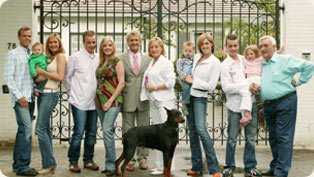
For football supporters the world round, Jean-Marie Pfaff is best known as a tremendously curly haired Belgian goalkeeper, at his best in the mid 1980s when the national team was at the peak of its powers. Most would probably presume that since retiring from the game he has gone on to calmly wile away his days as a goalkeeping coach or a cafe owner and hopefully, while he was at it, had a haircut.
Jean-Marie has, however, refused to go gently into that dark night of retirement. His hair style has altered not one iota and in Belgium, or in Flanders at least, he is inescapable. Every Monday evening the nation can tune in to the latest episode of 'the Pfaffs' reality tv show to find out what Jean-Marie and his offspring, their partners, and children have been up to over the past week.
This week for example, one of his daughters held a 'baby shower' at which nothing much happened except for a bit of a downpour. Another daughter fell over while attempting to iceskate. Yet another daughter visited the doctor to assess the likelihood of her giving birth within the next two weeks. One can only presume that the producers are desperate for something slightly momentous to happen.
Quite why any of this is deserving of academic analysis is a good question, yet that is exactly what Alexander Dhoest subjects it to in his essay 'The Pfaffs are not like the Osbournes: national inflections of the celebrity docusoap.' Dhoest argues that while both shows are 'superficially similar, they also show many differences, which are partly related to their respective national contexts. Although eccentric, The Osbournes is typically American in several respects, referring to American myths and themes. The Pfaffs, in contrast, are presented as typically Flemish, most clearly through the emphasis on their simplicity and ordinariness.'
Well I'm sorry to blow Mr. Dhoest's arguments out of the water but there are some important similarities. For a start both shows make absolutely excruciating viewing. Secondly, both Jean-Marie and Ozzy have daughters called Kelly. Thirdly, and most importantly, both men would probably sell aforementioned progeny if it would make them a quid or two. Jean-Marie is well known for the prominent sponsorship on his shirt collars.
But back to yesterday's show, and the point. Pfaff had been invited back to Germany to attend the Beer Festival. I say 'back' to Germany because in the 80s he stood between the sticks for none other than Bayern Munich. And it was here, after one of his first matches for Bayern, that he made the contribution that will outlast any cameras up the nose episode of reality tv in the folk memory. It was here that, having saved a crucial penalty, he attempted to speak German.
This video link may not be that funny for many outside Germany or Belgium (could that be the definition of 'not funny at all'?) but it captures exactly what most Flemish people do when they try to speak German. Speak Dutch but weirdly. Take it away Jean-Marie....
http://www.youtube.com/watch?v=NDf0p4MgFmw&search=pfaff
Monday, August 14
Je ne comprend rien
I had a stopover in Delhi on the way back from China a few years ago. Driving into the city centre from the airport the taxi driver asked how long I planned to stay in his country.
"A day", I told him.
"One day", he spluttered, "for the whole of India? Its not enough time".
I have been living in Belgium for close to 4 years now. Sufficient, you may think, to get a good understanding of the country that put the be into benelux. I would have to beg to differ. It may be about the same size as a large postage stamp (the scale on the top of a map of Belgium probably reads 1:1) but it is impossibly complex.
There are seven parliament's for example. The House of Representatives, the Senate, a Parliament for Flanders, one for Wallonia, another for Brussels, a sixth for the German speaking stamp edge in the east, and finally one for the French speaking community, which appears to be to link the French speakers of Wallonia and those in Brussels (French speaking but surrounded by Flanders). Quite how these institutions interact with each other is anyone's guess. Not even the Belgian's seem entirely sure. The only certain thing is that it has led to an incredible complication of all aspects of daily life. Parliament's exist to legislate, so you do the math.
In July of 2003 , young Flemish politician Vincent Van Quickenborne was appointed Secretary of State for Administrative Reform/Simplification. His task: cut red tape, make the country comprehendable. Van Quickenborne enthusiastically took up the challenge, announcing several initiatives aimed at 'ridiculous regulations and pointless pedantry'. His department launched the website www.kafka.be to track progress. Claiming (as of August 2006) that the job is 82% done, it contains such gems as the Kafka Index and 'Absurdity of the Month'.
By far the greatest innovation of the campaign, however, came when Van Quickenborne decided that he needed to set a personal example: he would call himself Q. The man decided to simplify his own name. James Bond fan's may consider it sacrilege but you can follow Q's exploits on: http://www.staatssecretarisq.be/
If the Belgian's can barely get to grips with their own country, what chance does the outsider have? If the question appears rhetorical, that is because it is. The outsider is shafted. Without hope. Puzzled. Bemused. Lost. Literally.
When we moved here 4 years ago, we hired a removal company to transport our few possessions to our temporary residence in the outskirts of Brussels. As he loaded the last bits and pieces into the van, we gave the poor man directions for when he arrived in Belgium.
"You'll be arriving from the South, so take the ring of Brussels, direction Antwerp, exit for Liege", we explained, forgetting that the Israel Palestine conflict is probably less intractable than the fight over what language should be used on road signs around Brussels.
"Righty O", he chirped, " see yiz on Tuesday so, about 4ish".
6 o'clock Tuesday evening. Still no sign of our belongings.
6.15. Nothing.
6.30.
6.45. The phone rings. "What the f*ck is going on?" screamed the clearly panicked voice on the other end, "I have been around this f*cking ring so many times I'm beginning to get dizzy".
"Calm down, calm down" we chorus, like a couple of scouse anger management therapists, "where are you?"
"If I knew that, I wouldn't be f*cking calling you."
"Just tell us what you can see on the signs."
"Well, I was heading towards the exits for L-i-e-g-e, but then it just f*cking dissappeared. Now I am going towards some place called L-u-i-k!"
"It is the same place".
"Don't be taking the piss out of me now, I'm really not in the mood".
"We're not, just follow Luik, then take the first exit for a place called Sterrebeek".
"Don't hang up on me", he screamed, clearly believing at this stage that he would rather have taken his chances with the Bermuda Triangle.
"We're here, don't worry. Just follow L-u-i-k, everything will be fine".
Some Belgian cities are easily identifiable in both Flemish and French: Genk is Genk no matter which way you look at it. Brugge and Bruges are not too disimilar. You shouldn't get too confused between Brussel and Bruxelles. Most, however, are less readily comparable and around Brussels where you are moving between French, Flemish and bilingual areas, this is crucially important. Antwerpen = Anvers. Gent = Gand. Mons = Bergen. And, of course, Liege = Luik.
As he rolled up the driveway, 15 minutes later, mobile phone still pressed firmly to his ear, he stammered, "that f*cking k-e-t-t-l-e better be on".
"A day", I told him.
"One day", he spluttered, "for the whole of India? Its not enough time".
I have been living in Belgium for close to 4 years now. Sufficient, you may think, to get a good understanding of the country that put the be into benelux. I would have to beg to differ. It may be about the same size as a large postage stamp (the scale on the top of a map of Belgium probably reads 1:1) but it is impossibly complex.
There are seven parliament's for example. The House of Representatives, the Senate, a Parliament for Flanders, one for Wallonia, another for Brussels, a sixth for the German speaking stamp edge in the east, and finally one for the French speaking community, which appears to be to link the French speakers of Wallonia and those in Brussels (French speaking but surrounded by Flanders). Quite how these institutions interact with each other is anyone's guess. Not even the Belgian's seem entirely sure. The only certain thing is that it has led to an incredible complication of all aspects of daily life. Parliament's exist to legislate, so you do the math.
In July of 2003 , young Flemish politician Vincent Van Quickenborne was appointed Secretary of State for Administrative Reform/Simplification. His task: cut red tape, make the country comprehendable. Van Quickenborne enthusiastically took up the challenge, announcing several initiatives aimed at 'ridiculous regulations and pointless pedantry'. His department launched the website www.kafka.be to track progress. Claiming (as of August 2006) that the job is 82% done, it contains such gems as the Kafka Index and 'Absurdity of the Month'.
By far the greatest innovation of the campaign, however, came when Van Quickenborne decided that he needed to set a personal example: he would call himself Q. The man decided to simplify his own name. James Bond fan's may consider it sacrilege but you can follow Q's exploits on: http://www.staatssecretarisq.be/
If the Belgian's can barely get to grips with their own country, what chance does the outsider have? If the question appears rhetorical, that is because it is. The outsider is shafted. Without hope. Puzzled. Bemused. Lost. Literally.
When we moved here 4 years ago, we hired a removal company to transport our few possessions to our temporary residence in the outskirts of Brussels. As he loaded the last bits and pieces into the van, we gave the poor man directions for when he arrived in Belgium.
"You'll be arriving from the South, so take the ring of Brussels, direction Antwerp, exit for Liege", we explained, forgetting that the Israel Palestine conflict is probably less intractable than the fight over what language should be used on road signs around Brussels.
"Righty O", he chirped, " see yiz on Tuesday so, about 4ish".
6 o'clock Tuesday evening. Still no sign of our belongings.
6.15. Nothing.
6.30.
6.45. The phone rings. "What the f*ck is going on?" screamed the clearly panicked voice on the other end, "I have been around this f*cking ring so many times I'm beginning to get dizzy".
"Calm down, calm down" we chorus, like a couple of scouse anger management therapists, "where are you?"
"If I knew that, I wouldn't be f*cking calling you."
"Just tell us what you can see on the signs."
"Well, I was heading towards the exits for L-i-e-g-e, but then it just f*cking dissappeared. Now I am going towards some place called L-u-i-k!"
"It is the same place".
"Don't be taking the piss out of me now, I'm really not in the mood".
"We're not, just follow Luik, then take the first exit for a place called Sterrebeek".
"Don't hang up on me", he screamed, clearly believing at this stage that he would rather have taken his chances with the Bermuda Triangle.
"We're here, don't worry. Just follow L-u-i-k, everything will be fine".
Some Belgian cities are easily identifiable in both Flemish and French: Genk is Genk no matter which way you look at it. Brugge and Bruges are not too disimilar. You shouldn't get too confused between Brussel and Bruxelles. Most, however, are less readily comparable and around Brussels where you are moving between French, Flemish and bilingual areas, this is crucially important. Antwerpen = Anvers. Gent = Gand. Mons = Bergen. And, of course, Liege = Luik.
As he rolled up the driveway, 15 minutes later, mobile phone still pressed firmly to his ear, he stammered, "that f*cking k-e-t-t-l-e better be on".
Monday, August 7
language problems
An evening meal in a local Italian eatery highlights the important difference between le (pain) and la(pin).
It is self-evident I suppose that if I simply learnt the local languages, I would have less difficulty speaking them. The problem is that fall into so many pits while attempting to speak that learning just seems hopeless.
I suppose you could call it entertaining. Take a recent visit to an new Italian joint not far from where we live. I ordered a pizza parmigianno, feeling reasonably confident that I had fully comprehended the menu:
Pizza Parmigianno, pizza avec tomates, aubergine et parmesan
I had reason to be extra confident when you consider that the each dish was spelled out in three languages, one of them my own:
Pizza Parmigianno, pizza with tomatoes, egg plant and parmesan
Tucking into some of the starchy bread on offer, I launched into a long discourse about the fact that as far as I was concerned the English for aubergine is aubergine. The Americans, as always, bore the brunt of my criticism for egg plant appearing on menus all over my adopted city, and probably well beyond.
I was still ranting as the waiter arrived with our dishes, a hefty steak for her, the so-called pizza parmigianno for me. I immediately caught the unmistakeable waft of copious amounts of garlic. Apparently emanating from my plate. Now if there is one thing I can stomach less than Americanisms, it is garlic. Dracula probably prefers it.
Having shed my plate of the most obvious shards of the offending vegetable (the garlic not the “egg plant”) I tucked in. A bit less than three-quarters of the way through, offended by the smell of my own breath, I had to admit defeat.
As the waiter arrived to clear up he asked whether everything had been to our satisfaction.
“C’était très bon”, smiled Barbara.
“Oui, ca était”, I confirmed.
He looked suspiciously at my plate and said something along the lines of ‘yeah right and by the way there is no way that they’ll believe me in the kitchen when they see what you’ve left over’.
Being over polite, I racked my brains for something to blame rather than the cooking style. “C’était a cause de la pain”, I stuttered eventually.
“Pardon?”, he said clearly puzzled. I ploughed on; “La pain, c’était a cause de la pain”.
“Ah oui, vous voulez le ramener pour le chien, peut-être?” he joked, hastily departing.
I turned to Barbara, who was grinning in an smug trilingual manner. “LE pain”, she scoffed, “bread is masculine”. I mulled this over. “I just blamed the rabbit didn’t I?”
It is self-evident I suppose that if I simply learnt the local languages, I would have less difficulty speaking them. The problem is that fall into so many pits while attempting to speak that learning just seems hopeless.
I suppose you could call it entertaining. Take a recent visit to an new Italian joint not far from where we live. I ordered a pizza parmigianno, feeling reasonably confident that I had fully comprehended the menu:
Pizza Parmigianno, pizza avec tomates, aubergine et parmesan
I had reason to be extra confident when you consider that the each dish was spelled out in three languages, one of them my own:
Pizza Parmigianno, pizza with tomatoes, egg plant and parmesan
Tucking into some of the starchy bread on offer, I launched into a long discourse about the fact that as far as I was concerned the English for aubergine is aubergine. The Americans, as always, bore the brunt of my criticism for egg plant appearing on menus all over my adopted city, and probably well beyond.
I was still ranting as the waiter arrived with our dishes, a hefty steak for her, the so-called pizza parmigianno for me. I immediately caught the unmistakeable waft of copious amounts of garlic. Apparently emanating from my plate. Now if there is one thing I can stomach less than Americanisms, it is garlic. Dracula probably prefers it.
Having shed my plate of the most obvious shards of the offending vegetable (the garlic not the “egg plant”) I tucked in. A bit less than three-quarters of the way through, offended by the smell of my own breath, I had to admit defeat.
As the waiter arrived to clear up he asked whether everything had been to our satisfaction.
“C’était très bon”, smiled Barbara.
“Oui, ca était”, I confirmed.
He looked suspiciously at my plate and said something along the lines of ‘yeah right and by the way there is no way that they’ll believe me in the kitchen when they see what you’ve left over’.
Being over polite, I racked my brains for something to blame rather than the cooking style. “C’était a cause de la pain”, I stuttered eventually.
“Pardon?”, he said clearly puzzled. I ploughed on; “La pain, c’était a cause de la pain”.
“Ah oui, vous voulez le ramener pour le chien, peut-être?” he joked, hastily departing.
I turned to Barbara, who was grinning in an smug trilingual manner. “LE pain”, she scoffed, “bread is masculine”. I mulled this over. “I just blamed the rabbit didn’t I?”
Subscribe to:
Posts (Atom)
